Lab Grown Diamonds vs Natural Diamonds | Complete Guide
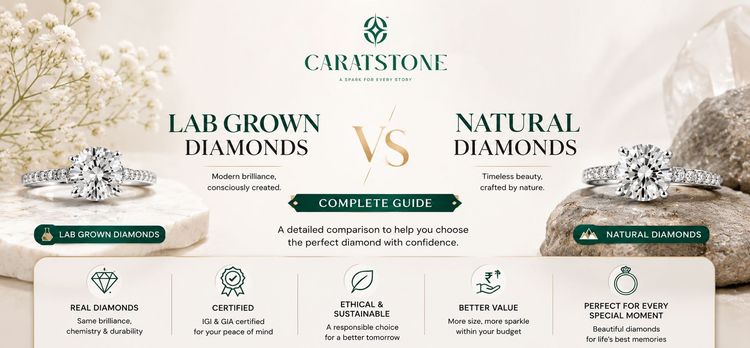
Discover the key differences between lab grown and natural diamonds, including their origin, quality, durability, pricing, and value. This guide helps you make an informed choice by comparing both options, so you can confidently select the perfect certified diamond that suits your style, preferences, and budget.
Choosing a diamond is one of the most meaningful decisions you'll make, whether you're shopping for an engagement ring, anniversary gift, or a timeless piece of fine jewelry.
One of the biggest questions buyers ask today is Lab Grown Diamonds vs Natural Diamonds – which is the better choice? The truth is, both options are real diamonds with exceptional beauty and durability. The key difference lies in how they are created. Understanding these differences will help you choose the diamond that best matches your style, values, and budget.
In this guide, we'll compare Lab Grown Diamonds and Natural Diamonds to help you make a confident and informed decision.
What Are Lab Grown Diamonds?
Lab Grown Diamonds are genuine diamonds created in advanced laboratories using innovative technology that replicates the natural diamond-growing process.
They are produced using two proven methods:
- High Pressure High Temperature (HPHT)
- Chemical Vapor Deposition (CVD)
Although they are created in a laboratory, they are 100% real diamonds. They have the same chemical composition, crystal structure, brilliance, hardness, and fire as natural diamonds. Even experienced jewelers require specialized equipment to identify whether a diamond is lab grown or mined.
Today, Lab Grown Diamonds have become a preferred choice for buyers looking for exceptional quality, modern craftsmanship, and outstanding value.
What Are Natural Diamonds?
Natural Diamonds are formed deep beneath the Earth's surface under extreme heat and pressure over billions of years.
They are brought closer to the surface through volcanic activity before being carefully mined, cut, polished, and transformed into beautiful jewelry. Because of their natural origin and limited supply, Natural Diamonds have traditionally been considered symbols of rarity and luxury. They continue to be a popular choice for those who value naturally formed gemstones.
Lab Grown Diamonds vs Natural Diamonds: Key Differences
Although both diamonds appear identical, there are a few important differences to consider.
Origin
The biggest difference is where they come from. Lab Grown Diamonds are created in a controlled laboratory environment, while Natural Diamonds develop naturally beneath the Earth's surface over millions of years.
Appearance
There is virtually no visible difference between Lab Grown Diamonds and Natural Diamonds. Both display exceptional brilliance, fire, and sparkle. Without professional testing equipment, it is almost impossible to tell them apart.
Quality
Both types of diamonds are graded using the same internationally recognized standards known as the 4Cs:
- Cut
- Color
- Clarity
- Carat Weight
Whether you choose a lab grown or natural diamond, these grading factors determine its overall beauty and value.
Durability
Diamonds are the hardest known natural material, ranking 10 on the Mohs Hardness Scale. Lab Grown Diamonds and Natural Diamonds share the same hardness, making them equally suitable for everyday wear, including engagement rings and wedding jewelry.
Price
One of the biggest advantages of Lab Grown Diamonds is their affordability. Because they are created in laboratories instead of being mined, production costs are lower.
This allows buyers to purchase a larger or higher-quality diamond while staying within the same budget. For many couples, this means choosing a more impressive center stone without compromising on quality or beauty.
Difference Between Natural Diamond & Lab Grown Diamond
| Feature | Natural Diamond | Lab Grown Diamond |
| Formation | 1–3 billion years underground | 2–6 weeks in a lab |
| Chemical makeup | Pure carbon | Pure carbon (identical) |
Visible difference | None to the naked eye | None to the naked eye |
Price (1 carat, similar quality) | ~$1,000–$12,000 | ~$200–$1,500 |
Certification | GIA, IGI, and others | GIA, IGI, and others |
Resale value | Higher, holds better | Lower, softer market |
Sustainability and Ethical Considerations
Many modern buyers consider sustainability when purchasing fine jewelry. Lab Grown Diamonds eliminate the need for traditional diamond mining, making them an attractive option for customers who prefer a more environmentally conscious choice.
Natural Diamonds, on the other hand, continue to follow responsible sourcing standards through various certification and ethical mining initiatives. Ultimately, both options are available through reputable jewelers who prioritize transparency and responsible sourcing.
Certification Matters
Whether you choose a Lab Grown Diamond or a Natural Diamond, certification is essential. A certified diamond provides independent verification of its quality based on cut, color, clarity, and carat weight.
At CaratStone Jewels, we recommend selecting diamonds certified by trusted gemological laboratories such as IGI or GIA, giving you confidence in your purchase.
Which Diamond Offers Better Value?
If your priority is maximizing beauty and size within your budget, Lab Grown Diamonds offer exceptional value. They allow buyers to invest in a larger carat weight or higher clarity without paying the premium typically associated with mined diamonds.
Natural Diamonds, however, continue to appeal to buyers who appreciate their geological history and naturally formed origin. The right choice depends on your personal preferences rather than one being objectively better than the other.
Which Diamond Is Best for Engagement Rings?
Both Lab Grown Diamonds and Natural Diamonds make stunning engagement rings. Lab Grown Diamonds have become increasingly popular among modern couples because they combine exceptional brilliance, durability, and affordability. They allow couples to choose larger center stones while maintaining their budget.
Natural Diamonds remain a timeless choice for those who appreciate their unique journey from deep within the Earth. Whichever option you choose, the most important factor is selecting a beautifully cut, certified diamond from a trusted jeweler.
Conclusion
When comparing Lab Grown Diamonds vs Natural Diamonds, it's important to remember that both are genuine diamonds with identical beauty, sparkle, and durability. The primary difference is how they are created. If you're looking for exceptional value, larger carat sizes, and a modern approach to fine jewelry, Lab Grown Diamonds are an excellent choice.
If you value natural rarity and traditional origins, Natural Diamonds continue to offer timeless appeal. At CaratStone Jewels, we believe every diamond should reflect your story, style, and personality. Our carefully curated collection of Lab Grown Diamonds combines expert craftsmanship, premium quality, and timeless elegance, helping you celebrate life's most meaningful moments with confidence.
Whether you're searching for the perfect engagement ring, wedding jewelry, or a thoughtful gift, choosing a certified diamond from a trusted jeweler ensures beauty that lasts a lifetime.
Frequently Asked Questions (FAQs)
1. Are Lab Grown Diamonds Real Diamonds?
Yes. Lab Grown Diamonds are real diamonds with the same chemical, physical, and optical properties as Natural Diamonds. The only difference is that they are created in a laboratory instead of forming naturally beneath the Earth's surface.
2. What Is the Difference Between Lab Grown and Natural Diamonds?
The main difference is their origin. Lab Grown Diamonds are produced using advanced technology in a controlled environment, while Natural Diamonds are formed underground over millions of years. Both have the same brilliance, durability, and chemical composition.
3. Is It Worth Buying a Lab Grown Diamond?
Absolutely. Lab Grown Diamonds offer the same beauty, durability, and sparkle as Natural Diamonds while providing better value. They allow you to purchase a larger or higher-quality diamond within your budget.
4. Can You Tell the Difference Between Lab Grown and Natural Diamonds?
No. To the naked eye, Lab Grown and Natural Diamonds look identical. Only specialized gemological equipment can determine whether a diamond is lab grown or naturally mined.
5. Why Are Lab Grown Diamonds More Affordable?
Lab Grown Diamonds cost less because they are created in laboratories rather than mined from the earth. This reduces production costs while maintaining the same quality and appearance as Natural Diamonds.
6. Which Is Better: Lab Grown or Natural Diamonds?
Neither is universally better, it depends on your priorities. If you value affordability and exceptional quality, Lab Grown Diamonds are an excellent choice. If you prefer a naturally formed gemstone, Natural Diamonds may be the right option.
7. Do Lab Grown Diamonds Last as Long as Natural Diamonds?
Yes. Lab Grown Diamonds are just as durable as Natural Diamonds. With a Mohs hardness rating of 10, they are suitable for everyday wear and can last a lifetime with proper care.
8. Are Lab Grown Diamonds Good for Engagement Rings?
Yes. Lab Grown Diamonds are a popular choice for engagement rings because they offer exceptional brilliance, durability, and value while allowing buyers to choose larger or higher-quality diamonds within their budget.